
Just as New Zealand’s construction sector was beginning to emerge from one of its most difficult periods in recent memory, a new threat to cost certainty is gathering offshore.
Instability in the Middle East has emerged as a growing risk to both economic growth and inflation. Fuel prices have risen sharply, freight markets are becoming less predictable, and suppliers throughout the construction sector are beginning to warn that further price increases may be on the way.
For an industry that has spent the past two years rebuilding confidence after the disruption of the pandemic era, the concern is not simply that costs may rise. It is that volatility may be returning just as many businesses were beginning to see stability return.
Warning Signs Already Visible
Recent figures from the Ministry of Foreign Affairs and Trade show diesel prices have risen by around 38 percent since the conflict began, while petrol prices have increased by approximately 17 percent. Treasury has identified global instability and higher energy costs as risks to both inflation and economic growth, while freight operators, suppliers and contractors are all reporting renewed pressure across parts of the supply chain.
Among the clearest signs are the notices now arriving from suppliers.
Wayne Simpson, Commercial Manager at J.A. Russell, says the volume of price increases flowing through the market has accelerated significantly during the past two months.
“Certainly in April and May, we’ve had a considerable increase in the number of suppliers that have announced price increases,” he says.
While annual adjustments are not unusual, Simpson says the volume and scale of recent increases stand out.
“For price increase summaries in June, we’ve got around 40 price increases that we’re implementing. We’d normally expect half that. Cable, for example, in the last four months we’ve had increases imposed on us that have collectively been above 40 percent.”
Simpson says PVC-based products are showing similar trends.
“PVC conduit and duct have seen increases of around 20 percent or more.”
Simpson traces many of those increases back through the supply chain to rising freight costs, higher raw material prices and disruptions affecting global resin markets. Manufacturers dependent on PVC resin have already been forced to source alternative supplies at higher cost, with those increases now working their way through distributors and merchants.
Many suppliers carry inventory, but stock levels are rarely sufficient to insulate businesses from sustained price movements. A merchant may typically hold around two months’ worth of stock on key product lines, but when customers become aware that increases are coming, purchasing activity often accelerates, quickly exhausting inventory and bringing replacement pricing into effect sooner than expected. In practice, market increases can appear much faster than many project teams anticipate.
Housing is Local, Systems are Global
Julien Leys, Chief Executive of the Building Industry Federation of New Zealand, believes the sector’s exposure to international events remains widely underestimated.
“While housing building is local, home building systems are global, and we import 90 percent of our key building materials from overseas to New Zealand,” he says.
That dependence means international disruptions rarely remain international for long. Energy markets, freight routes, manufacturing costs and shipping delays all eventually find their way into local project budgets. The problem is compounded by New Zealand’s position at the end of the global supply chain — when disruption hits, shipping lines prioritise larger, more profitable markets first.

Julien Leys, Chief Executive, New Zealand Building Industry Federation
“Little old New Zealand, we sort of come a very distant last, and that’s another potential risk for us,” says Leys. “
“We’re still not resilient in the sense that when we’ve got key materials and energy coming out of one part of the world, we’re not immune to that.”
Leys points to plastics and petrochemical products as one of the earliest indicators of pressure emerging within the system.
“Plastics are the sort of canary in the coal mine where all the resins that go into making plastics that are petroleum-based are being impacted.”
He notes that IPLEX pipe products have already put through price increases of between 30 and 40 percent, while fuel costs continue to affect every stage of the construction supply chain.
“Diesel is the thing that moves the dirt, runs the generators, fuels the trucks. The cumulative effect can be substantial.”
The pressure is not coming from global markets alone. New Zealand’s domestic gas shortage — recently confirmed to be worse than initially expected — is adding a further layer of cost to locally manufactured building materials. When gas and diesel costs rise in combination, the manufacturing cost of energy-intensive products, including cement, glass, brick and steel, all follow.
“When energy starts getting that expensive, cement, glass, brick, steel — all those costs start going up. We’ve got to deal with both those things at the same time.”
The full import chain compounds the problem further. Leys describes the experience of a major importer facing a 22 percent manufacturing increase from overseas suppliers, followed by higher freight costs, rising port charges and increased domestic transport costs before products even reach customers in New Zealand.
“So that whole flow-on chain effect is quite significant.”
What concerns Leys is not simply the direct impact of rising costs but the way uncertainty influences behaviour throughout the market. Earlier this year, there were signs the economy was beginning to improve, growth was returning, confidence was stabilising, and many businesses were beginning to look beyond the prolonged downturn that followed the pandemic.
“We started to get to a point where the economy was seeing a little bit of growth,” he says. “And then that uncertainty has come back.”
Leys says the effect is already visible in project decision-making, with a dampening effect on growth, delayed investment commitments and early signs of pressure on lead times. The consequences extend beyond individual developments — delayed decisions shorten forward work pipelines, reduce visibility for contractors and create additional pressure throughout the supply chain.
“It’s not like when you go into distribution centres and merchants and warehouses that we’ve got empty shelves. It’s more about price and patience. Products remain available. The challenge is that they may cost more and take longer to arrive.”
Businesses further up the supply chain are already looking ahead. With suppliers required to give three months’ notice of price increases, many of the increases already notified will flow through regardless of how the geopolitical situation develops — meaning further price movement is effectively locked in through at least the third quarter of the year.
A Market Under Pressure
If suppliers are seeing early signs of escalation and industry bodies are seeing growing uncertainty, contractors are experiencing a different reality altogether.
Andrew Moore, Commercial Manager of CMP, says the market remains extraordinarily tight.
“The industry is very, very flat,” he says. “Residential construction’s slowed right down. Even commercial construction has slowed right down, and there’s way less tower cranes up on the skyline now than there was two or three years ago.”
The downturn has fundamentally altered the economics of the sector. Subcontractors are competing aggressively for work, labour costs have softened, and many businesses are accepting lower margins simply to maintain workload.
“The labour component has come down significantly, and that’s probably offsetting a lot of the natural material price rises we’re seeing.”
That observation helps explain why many projects have not yet experienced dramatic cost increases despite mounting pressure elsewhere in the supply chain. For now, weaker labour markets are helping absorb some of the escalation, but Moore is clear that this should not be mistaken for a healthy market.
“Auckland’s as tight as I’ve seen it now, probably for 18 years, not since 2008,” Moore says.
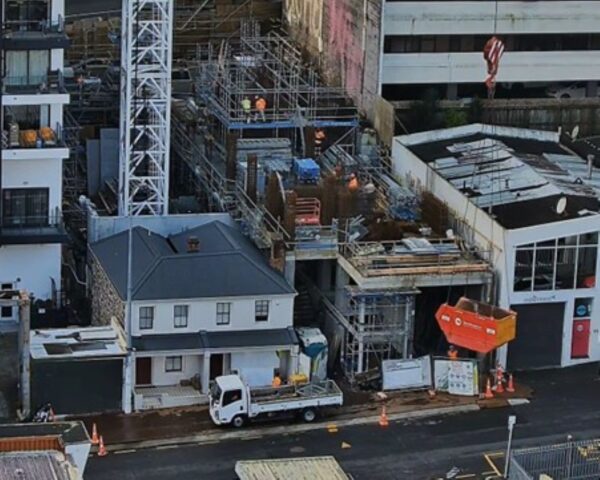
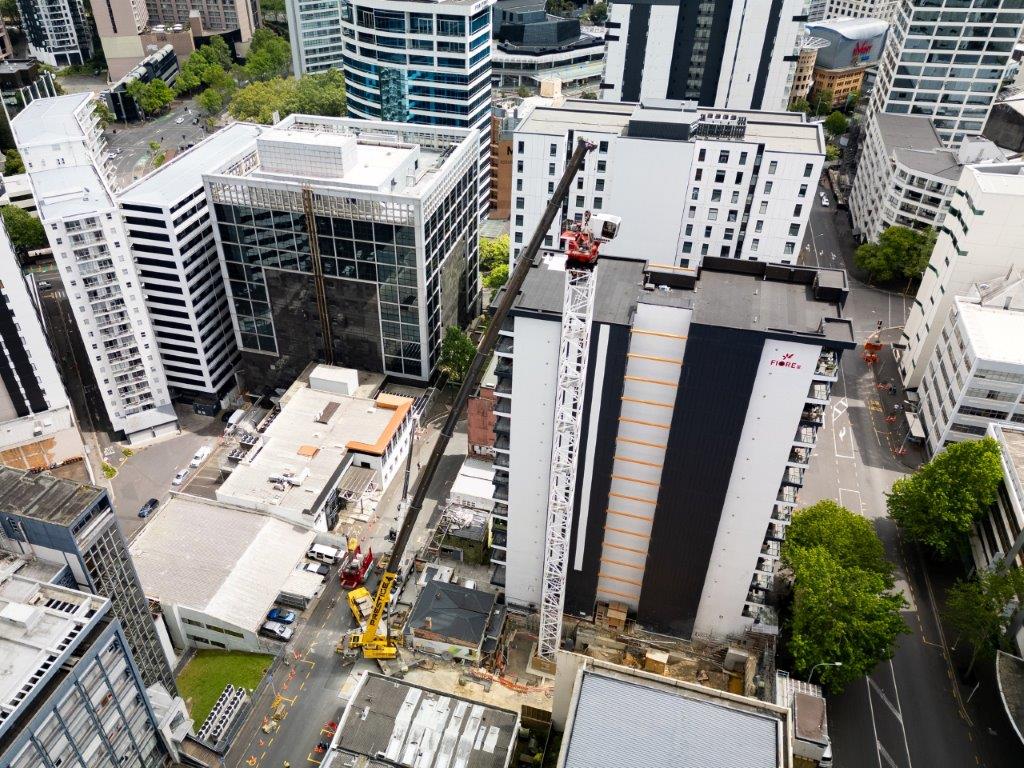
Site progress, Moxy, Auckland – CMP Construction
That creates an unusual dynamic. Material costs are beginning to move upward at precisely the moment many contractors are least able to pass those increases on. Yet even within that environment, pockets of activity remain. Hotels, student accommodation and Queenstown developments continue to generate demand, but confidence remains fragile, and businesses are working hard to secure every available project.
The pressure on contractors is also surfacing in contract negotiations. Leys says some subcontractors are already declining to sign fixed-price arrangements.
“They can’t afford to sign a fixed contract if their own costs are going up.”
That issue is beginning to attract legal commentary. Recent analysis from Wynn Williams and Simpson Grierson has highlighted the implications of fuel-related escalation, freight volatility and risk allocation within construction contracts — particularly for projects operating under fixed-price arrangements where contractors may be required to carry pricing risk for extended periods.
The lessons of the pandemic remain fresh: contractors that accepted pricing risk during periods of rapid escalation often found themselves exposed to increases they could not recover. While current conditions are nowhere near those experienced during 2021 and 2022, the discussion reflects a growing recognition that the industry may once again need to think carefully about how risk is allocated, priced and managed.
Decisions Delayed
That same caution is visible from the development side of the industry.
Mark Gascoigne, Director at Walker Group Architects, says he is not yet seeing widespread material shortages or dramatic cost escalation directly affecting projects. Instead, the more immediate impact is uncertainty.
Where cost pressure is appearing, it is often showing up in design decisions rather than direct price notices. Gascoigne says developers are increasingly asking for materials to be substituted to keep projects financially viable — switching from imported cedar cladding to locally sourced pine weatherboards, for example, with the cost difference running to hundreds of thousands of dollars across a large development.
The majority of projects his practice is currently working on are being funded by American investors, drawn to New Zealand by stronger returns and the country’s reputation as a politically stable destination for capital. But even that pipeline is showing signs of hesitation.
Projects that appeared close to final approval are now being pushed back, with sign-offs that seemed weeks away slipping further into the future. At the same time, the volume of enquiries coming in has risen sharply — but the conversion rate tells a different story.
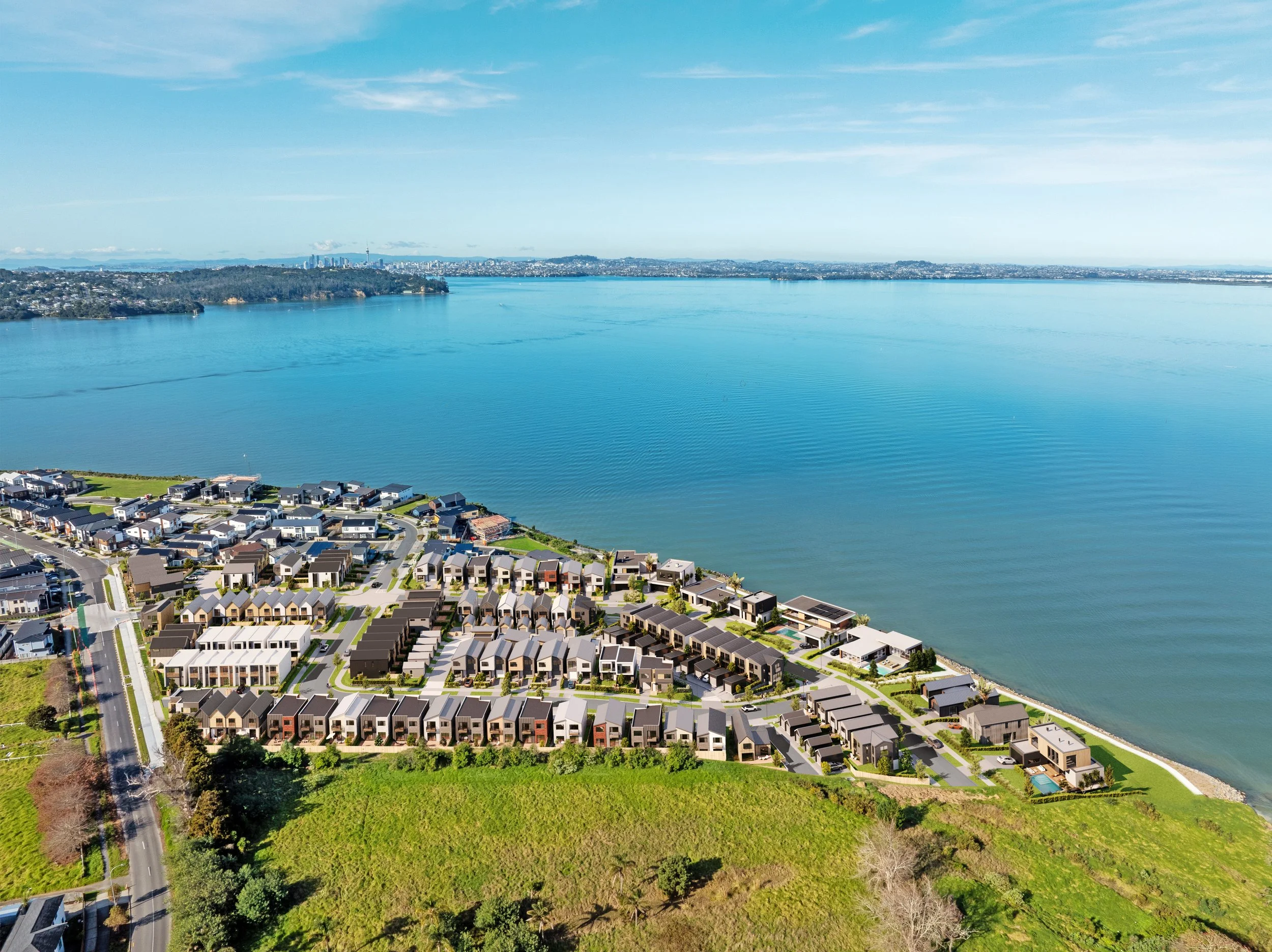
Captains Cove subdivision, Walker Group Architects
“The number of jobs where people say ‘hey, we’re about to kick off this job, give us a price’ is up dramatically,” Gascoigne says. “But suddenly now they’re saying ‘yeah, we’re still going to do it, but not yet.’”
For developers, future costs often matter as much as current costs. Questions around inflation, interest rates, construction pricing and economic confidence all influence investment decisions. When those variables become harder to predict, project approvals can slow.
“Many customers are asking: if I’m to commit to building a new house or a whole subdivision of a hundred houses, what’s to say the prices won’t go through the roof and I won’t be able to afford it at the end?”
The result is a market that appears ready to move, but remains hesitant.
“I really get the impression that’s like the start of a Formula One race. Everybody’s revving up, and they’re just stuck at the red light, but they’re all itching to go.”
Looking Ahead
The construction sector is better prepared than it was five years ago. Supply chains have diversified, procurement processes have improved, and businesses have become more aware of supplier risk. Yet the industry remains deeply connected to global energy markets, freight networks and manufacturing centres thousands of kilometres away.
When suppliers are implementing twice the usual number of price increases, diesel costs continue to climb, contractors are declining fixed-price risk, and developers are delaying decisions, it is difficult to dismiss the possibility that a new period of volatility may be beginning.
No one is forecasting a crisis. But after several years spent rebuilding certainty, few are prepared to ignore the possibility that it may be returning.
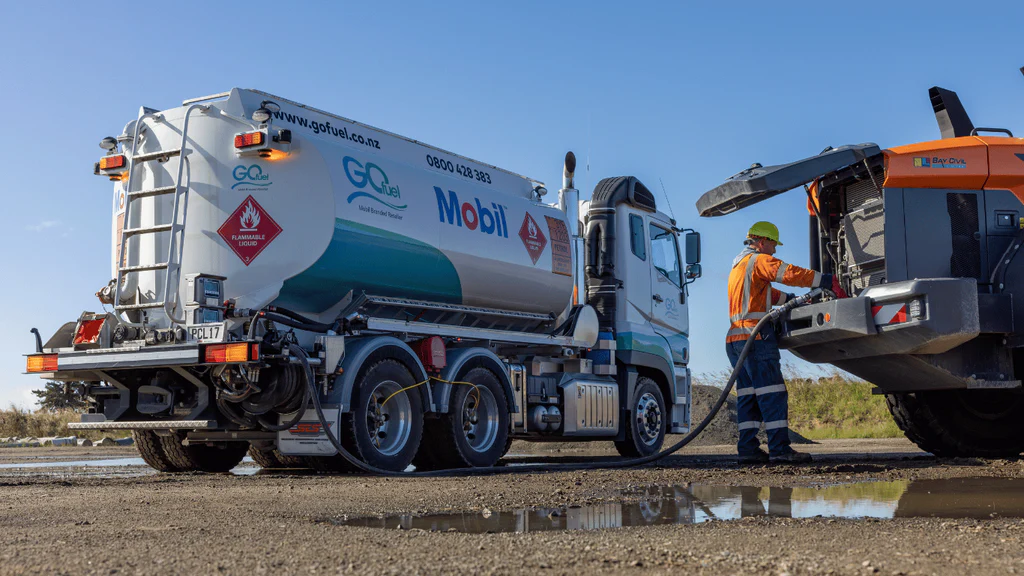
Header Image courtesy of GOfuel