
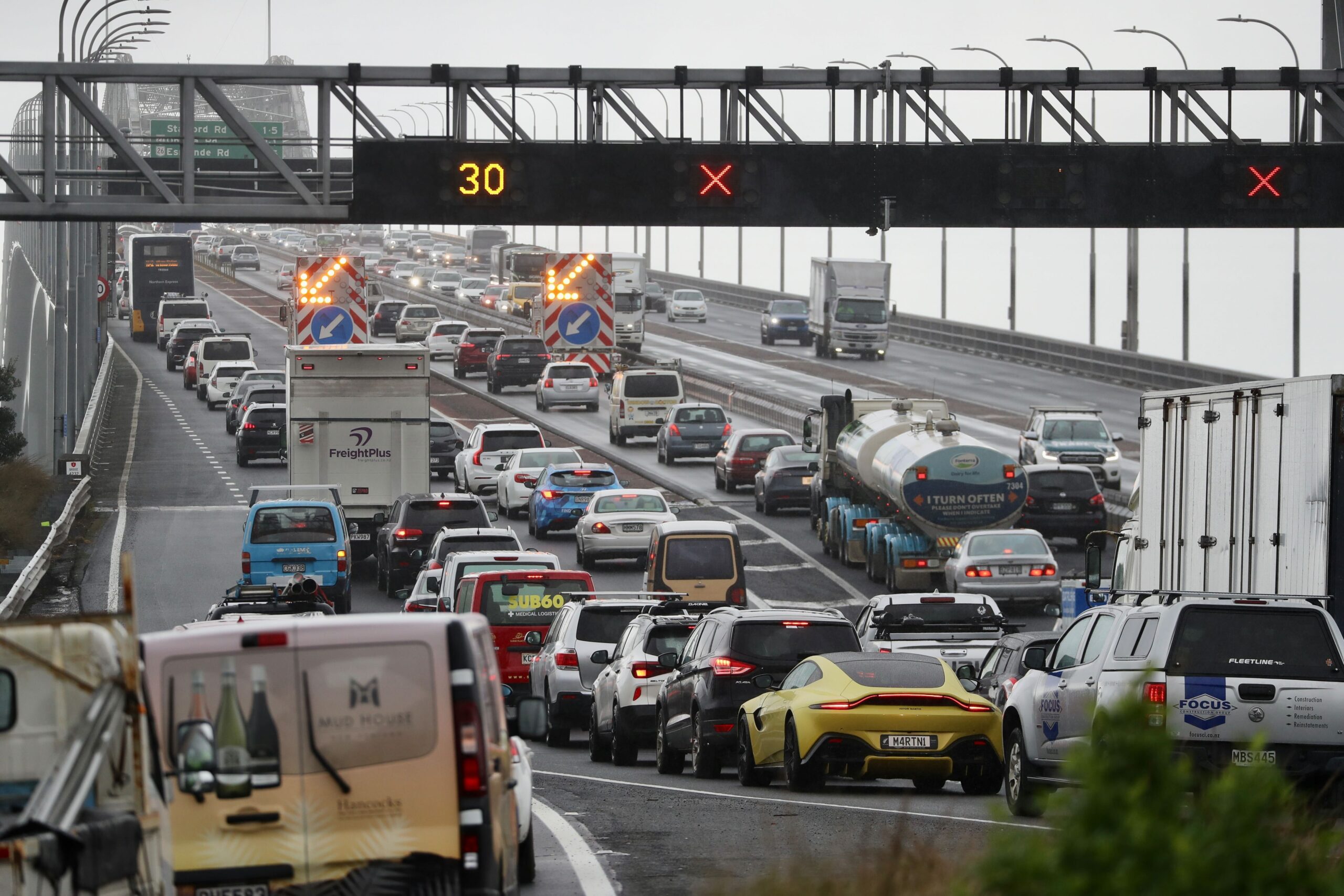
After years of shifting priorities and interrupted programmes, construction leaders are asking the next coalition for one thing above all: a dependable plan, funding to support it and the confidence that good decisions will last.
The construction industry has spent much of this year waiting for improving prospects to become work. Now it is waiting for a government. Beyond the coalition arithmetic, however, its message is becoming unusually consistent: give us a programme we can plan around, and stick with it.
The preliminary result puts National, ACT and New Zealand First on 67 seats in a 131-seat Parliament, where 66 is a majority. Subject to the final count and negotiations, the existing partners are positioned to return. That would mean familiarity with the direction of reform, but not certainty about the work ahead.
The sector is tired of the churn. Policies change, projects are reconsidered, funding tightens, and businesses are asked to prepare for a recovery whose timing remains uncertain. Each decision may be justified on its own. But, together, they make it hard to employ an apprentice, retain a skilled team or invest in the equipment needed to build more efficiently.
Infrastructure New Zealand chief executive Nick Leggett, Building Industry Federation New Zealand chief executive Julien Leys and Master Builders chief executive Ankit Sharma approach the problem from different parts of the sector. All three want longer planning horizons, credible funding and greater agreement across political divides. They back change where it improves delivery and want governments to keep what works.
The difficulty for whoever emerges from the coalition negotiations is money. Both National and Labour went into the election emphasising fiscal restraint, and neither offered the sector a spending-led boom. How much stability can a government provide if pressure to find savings keeps making long-term commitments negotiable?
The industry’s answer comes down to a plan that outlasts the government that made it, funding to match, and rules that stay put long enough to be used.
The cost of starting again
Asked whether he would prefer the existing coalition to continue, Leggett declines to take sides. Infrastructure New Zealand works across the political spectrum, he says. Its objective is a system that functions beyond the term of any government.

Nick Leggett, Chief Executive, Infrastructure New Zealand
“There isn’t a Labour way or a National way to deliver infrastructure. There’s a good way and a bad way.”
He puts the cost of stopping, pausing or reprogramming infrastructure at $11.8 billion over the past 25 years, and suspects the figure is conservative. He is quick to say what it could have paid for: Nelson Hospital, mass rapid transit for Canterbury, a start on a second Auckland harbour crossing.
“They don’t have to agree on everything,” he says of the parties. “But if they can agree on more and we can get greater certainty across election cycles, we’re going to be in a much better position.”
His practical proposal is to give agencies such as NZTA and KiwiRail five, 10 or 12 years of indicative funding, allowing them to sequence projects within longer programmes. Contractors and suppliers could then make investment decisions against something more dependable than the next Budget announcement.
Sharma adds a qualification that prevents this from becoming an argument for protecting every inherited project.
“We need robust business cases, credible funding plans and a willingness to change course when the evidence calls for it. But once we have made sound decisions, we need to follow through.”

Ankit Sharma, Chief Executive Officer, Master Builders New Zealand
He cites Ultra-Fast Broadband as major infrastructure delivered across changes of government.
Leys worries about the workforce. Infrastructure supports the wider building supply chain and can keep employed people whose residential or commercial work has dried up.
“Every time we have a downturn, everyone leaves, and they go elsewhere, usually Australia because it’s better paid and they can get work there.”
Firms lose capability in every downturn, then have to rebuild it for the next upswing. Leys points to the opposite experience in the 1930s, when a small company called Fletcher won a long-term state housing contract from the Labour government of the day. With that certainty, he says, it invested, hired and grew into the builder the country knows today. A government that wants better productivity has reason to offer that certainty again.
When restraint becomes a larger bill
The fiscal constraints are real. Treasury’s Budget 2026 strategy retained net new operating allowances of $2.4 billion a year for the next three Budgets, putting pressure on ministers to find savings and reprioritise.
But fiscal restraint does not mean every form of investment is shrinking. Budget 2026 also contained a net capital package of $5.7 billion. Operating allowances and capital allocations are different measures, and neither is the total infrastructure programme. There is room for choices within a constrained Budget, even when there is little room for additional commitments.
The industry’s argument is that those choices need to be assessed over a longer period. Deferring maintenance may improve this year’s accounts while leaving a more expensive failure for a future government. Cancelling a project may avoid expenditure but also write off preparatory work and disrupt the capacity assembled to deliver it.
Sharma puts maintenance at the centre of that argument. Looking after existing schools, hospitals and other public assets deserves the same commitment as building new ones, he says. Otherwise, the apparent saving becomes a cost passed to the next generation.
Leggett calls the idea of investing less in maintenance “fanciful” when a “maintenance mountain” is already emerging.
“We cannot cut our way to prosperity,” he says.

Julien Leys, Chief Executive, Building Industry Federation
Leys sees the same risk in confidence. If households and builders sense that government is pulling back, he says, they hold back too, and the effect spreads across the economy. He wants government to say that the country can “build our way out of this recession”.
Leggett wants more value from existing budgets. He points to classroom investment as an area where delivery has improved, and wants health, education and transport programmed over longer periods. He thinks the parties recognise that “it’s not about cutting a smaller cheque for infrastructure, it’s about doing it better so we get more out of what we do invest.”
That starts, he argues, with counting the whole life of an asset. New Zealand is poor at it: when the country builds a road, it drives the upfront cost as low as it can and calls that a deal. Public-private partnerships force a different habit, but he is clear about their limits.
“If you think about a PPP, it’s not about thinking it’s free money because it’s not.”
A contract running for 25 years, for example, builds maintenance and renewal into the price alongside the initial build.
“We should only do a PPP when it’s cheaper than the Crown funding and delivering and maintaining it itself.”
Where that test is met, Leggett sees room for domestic capital, including KiwiSaver, to ease the call on the Crown balance sheet while New Zealanders keep a stake. He insists on safeguards, and on taxpayers getting a better deal.
Private financing is a way to deliver suitable projects, and the bill still has to be paid. The test is whether it offers better value across the life of the asset.
That makes long-term planning a question of fiscal discipline. A government has to tell the difference between spending it can sensibly avoid and spending it is merely postponing at greater cost, and the industry has to show that more dependable funding buys better value.
Finishing what has been started
The same demand for continuity applies to the reform programme.
“Confidence comes from a funded pipeline and decisions that stick, not simply another round of legislation,” Leggett says. The sector needs consistent decisions from government, but also from the institutions administering its rules.
Consenting is where Leys finds the inconsistency plainest. He describes 67 building consent authorities each approaching the task differently, which he calls “ridiculous”, and would prefer a uniform system run by perhaps two or three organisations, with more private bodies involved. One already operates out of Christchurch for group home builders. Sharma wants the same direction of travel: greater collaboration, consistent standards and a practical pathway for accredited builders to self-certify low-risk work.
Leys backs self-certification too, including extending it to licensed building practitioners, as electricians and plumbers can already do. But he wants standards to hold.
“There has to be a balance. I don’t think we can go full hog, but we can certainly move a lot faster on technology than we’ve done.”
That balance matters more as overseas-certified products reach the market. Leys welcomes the principle, which began in July with Australia’s WaterMark standard: if a product meets the Building Code, he says, there is little sense in certifying it twice. The fishhooks lie with standards from Europe, Asia or the United States, where someone must judge whether they suit New Zealand’s seismic, sun and coastal conditions. He has concerns that this may not be applied consistently, and understands some of the momentum has slowed. It is early days, he says, and one for the next government to grapple with.
Leys also wants better digital product information. MBIE’s building product information requirement is, in Leys’s words, a halfway house, because the detail still sits in PDFs on supplier websites that almost nobody opens. He wants it on QR codes, so that designers, builders, inspectors and homeowners can see what has been specified and installed, and an inspector can scan a wall and know that what is behind it matches the specification.
Sharma and Leys want these changes to keep coming, and to become dependable enough for businesses to rely on.
The planning overhaul will be judged on similar terms. Official guidance describes a staged transition from the RMA to the new system, with existing arrangements continuing while national direction, regional plans and supporting processes are developed. Sharma wants that transition well managed, so that housing growth is connected to the infrastructure and services it needs. Leggett wants the replacement legislation passed, but says implementation will be the test: clear, durable national direction and a coherent system that communities, investors and infrastructure deliverers can trust.
He also wants Parliament to finish the Public Works amendments, for faster and more predictable land acquisition with fair compensation and early engagement, particularly with Māori landowners, and the Land Transport Revenue Amendment Bill, to replace a shrinking fuel excise base with workable road user charging. He expects full-time electronic charging on every vehicle before long. “That’s controversial for Kiwis, but what we’ve got at the moment just isn’t sustainable.”
H1 provides an immediate example of the adjustment businesses must manage, and a test of Sharma’s call for a stable, predictable Building Code. From 27 November, previous editions of the relevant energy-efficiency compliance documents can no longer be used. The Schedule Method is being removed, although MBIE says the overall required level of energy efficiency and insulation remains unchanged.
Leys raises concerns about the cost of some specifications, while acknowledging the objective of warm, dry homes. He does not know whether a new coalition will revisit H1, though he would not be surprised if it did. For businesses making decisions now, the difference between an established transition and a possible review matters. Any further change needs time to adapt.
Certainty also depends on trust
Retaining what works becomes more contentious when reform changes who carries the risk.
The Building Amendment Bill passed its first reading and reached the Transport and Infrastructure Committee before the election. Public submissions remain open, with further scrutiny awaiting the re-establishment of select committees in the new Parliament.
Its proposed move to proportionate liability would limit a liable party to its allocated share of a loss. That offers greater certainty to participants. For a homeowner, the unresolved question is what happens when another responsible party cannot pay.
Sharma supports the principle, but makes consumer protection a condition.
“But fairness cannot come at the expense of homeowners. A robust, properly regulated warranty and insurance framework must be central to these changes, not something considered further down the track.”
He wants genuine cover, strong oversight and affordable dispute resolution, and says it is still unclear how the bill out for consultation will provide them. Master Builders has an interest in guarantee arrangements, but his test is that homeowners should not inherit the cost when a liable participant fails.
Leys questions whether enough insurance providers will enter the market. He estimates a potential coverage gap of around 40 per cent, referring to larger projects or renovations over $100,000. Existing trade association schemes do not cover every builder or homeowner, he says. The model was drawn from New South Wales, Victoria and Queensland, where governments act as the backstop, and Australia, which introduced it in the 1990s, is still refining it.
“I think it would be naive to think that if the government does not get involved somehow as a backstop, that the market’s going to have sufficient insurance providers to fill that gap.”
Sharma speaks of warranties and Leys of insurance, but both want the safeguards in place before the reform takes effect.
A related question: who stands behind a system that checks less, sits beneath the Bill’s proposed repeal of the Building Research Levy Act. The Government’s case for an MBIE-administered funding model is greater oversight, transparency and contestability. It provides for a research strategy and an investment advisory panel.
Leggett says the change should not proceed. In his view, diverting the levy from BRANZ and making it contestable under MBIE, which is also the regulator, is the wrong answer, and the research BRANZ has built up over 50 years should be protected, particularly as the climate changes.
Leys supports modernisation but opposes repeal. BIF wants a defined role and dependable funding for BRANZ, and a formal voice for the industry paying the levy.
“The wider reforms ask the building system to check less and rely more on product evidence, so New Zealand needs more independent building science, not less.”
Better accountability is a reasonable aim, but so is keeping the expertise the reforms depend on, and the incoming government will need to show it can do both.
A programme the industry can believe in
There are reasons to believe the sector is ready to respond. Sharma says 68 per cent reported a strong or steady pipeline in Master Builders’ 2026 State of the Sector survey. Leys points to building consents rising for four months in a row, and to the 30,000 homes a year he says the country needs as a minimum.
“That is encouraging, particularly after several difficult years, but having work in the pipeline is one thing. Turning those enquiries into viable projects is another.”
Finance, costs and consenting delays still stand between interest and activity. Sharma’s request for the first 100 days is therefore practical: clear priorities for the reforms already underway, a realistic timetable, a continued commitment to the Infrastructure Commission’s 30-year National Infrastructure Plan, and clarity about which projects are funded, when they will come to market and how maintenance and renewal will be paid for. It is, in effect, the funded pipeline Leggett describes.
Leys puts the political ambition more simply: “Is this good for New Zealand? And if it is, let’s get behind it.”
Will the next coalition heed them? A return of familiar ministers and policies could reduce some uncertainty, but the harder task is making commitments that survive the next Budget and stay credible beyond the next election. That takes agreement on priorities and the discipline to fund them and leave sound decisions alone.
Whichever coalition emerges in the coming weeks, confidence and stability are the Christmas gifts the industry wants, and reassurance will not be enough. Businesses will look for funded programmes, workable rules and decisions they can rely on when they employ, train and invest.
Sharma says the sector is experienced, resilient and ready to deliver. “If we want the industry to plan and invest for the long term,” he says, “Government needs to do the same.”