
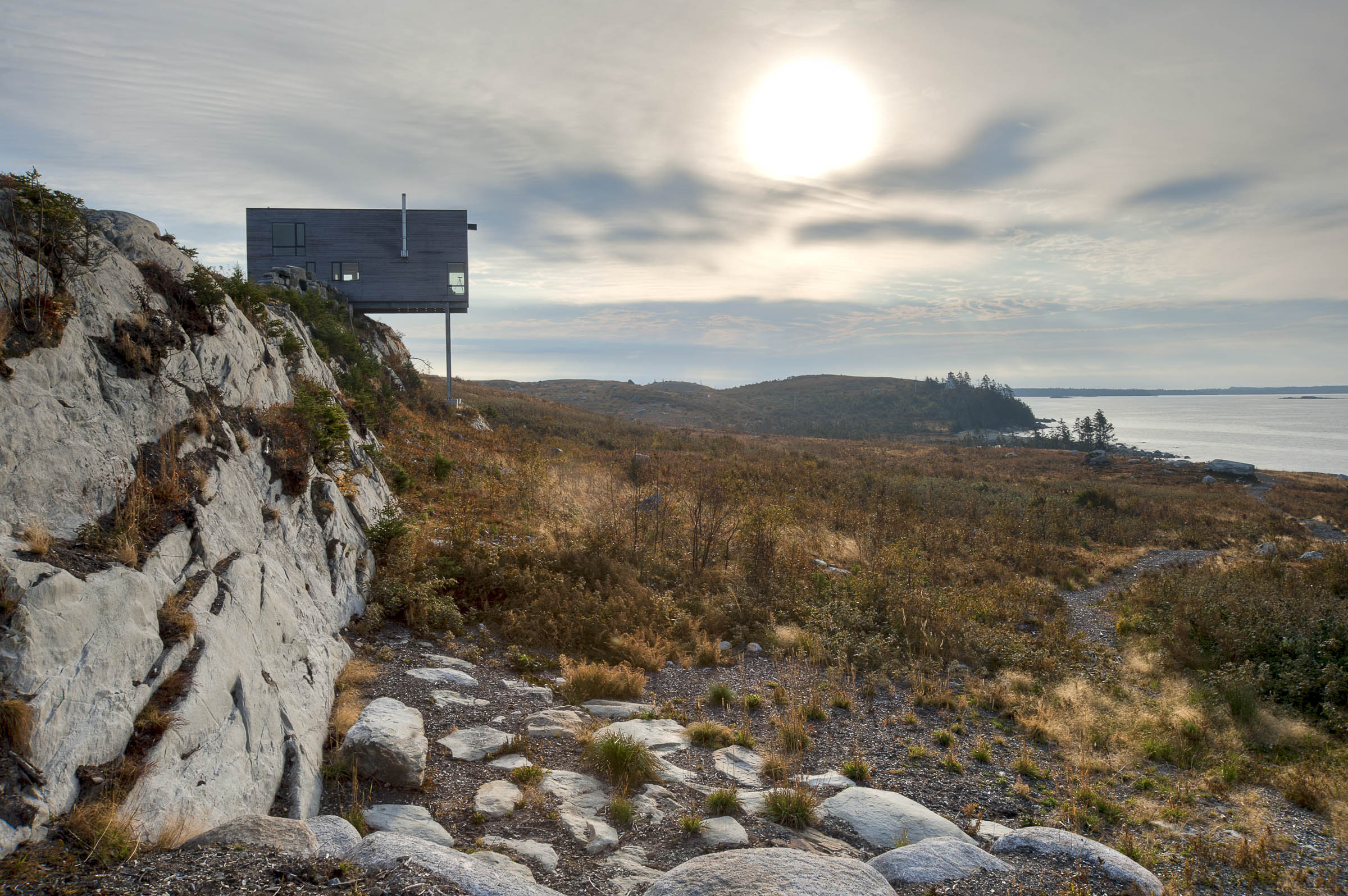
Ahead of his September Design Experience keynote, Canadian architect Talbot Sweetapple argues that buildings shaped by local climate, materials and traditions can be more meaningful, resilient and economical than the generic solutions spreading across the globe.
There is a familiar logic behind much of the architecture now appearing around the world. Simple forms are easier to price, certify and reproduce. Standardised systems promise lower risk, while prefabrication offers a route around expensive labour and slow construction.
When the same solutions are repeated across the globe, buildings can lose any meaningful connection to where they stand. They may be efficient and technically accomplished, but they could belong almost anywhere.
Talbot Sweetapple does not accept that sameness is the unavoidable price of modern construction. The Canadian architect and principal of MacKay-Lyons Sweetapple Architects argues that climate, landscape, material culture and local building traditions are not obstacles to innovation, but valuable design intelligence.
The practice has earned more than 170 awards, including the 2014 Royal Architectural Institute of Canada Firm Award and the 2017 Global Award for Sustainable Architecture.
It is the argument he will bring to New Zealand in September as keynote speaker for Design Experience, under the title “Regionalism as resistance: Reclaiming meaning in an era of global sameness”.
A Place of its Own
For Sweetapple, regionalism does not mean copying an old building or treating local character as decoration. It begins with understanding how a place actually works: its weather, geology, available materials, trades, economics, politics and patterns of life. Those conditions become part of the building’s logic from the beginning.
“I was accused of being passé and a dinosaur because I was talking about place-based architecture,” he says. “I was told to get with the times and be a globalised citizen. I said, ‘No, I don’t think so. I’m done. I’m tripling down.’”
Sweetapple calls that position “regionalism as resistance” – a refusal to let international fashion, imported systems or a universal architectural language override what is already known about building well in a particular location.
A mentor once told him that “architecture is the art of what you can make happen”. Sweetapple says architects therefore need to understand the client, politics, climate, landscape and material culture, then turn those forces into a coherent story.
When Cheapness Becomes An Aesthetic
He points to the extraordinary prominence now given to self-storage buildings throughout North America. Some have large, glazed façades and a monumental street presence, while a town hall may be deliberately stripped of anything that could be interpreted as lavish.
“Some of these storage buildings are nicer than town halls. They are almost monuments to stuff,” he says. “But if a town hall looks as though public money has been spent, it is frowned upon. Where did we lose our way when it comes to investing in our places and towns?”
Sweetapple describes how with an early project, designing a civic arena in an agricultural community, his practice drew its inspiration from familiar rural forms. The resulting building – local people began calling it “the barn”.
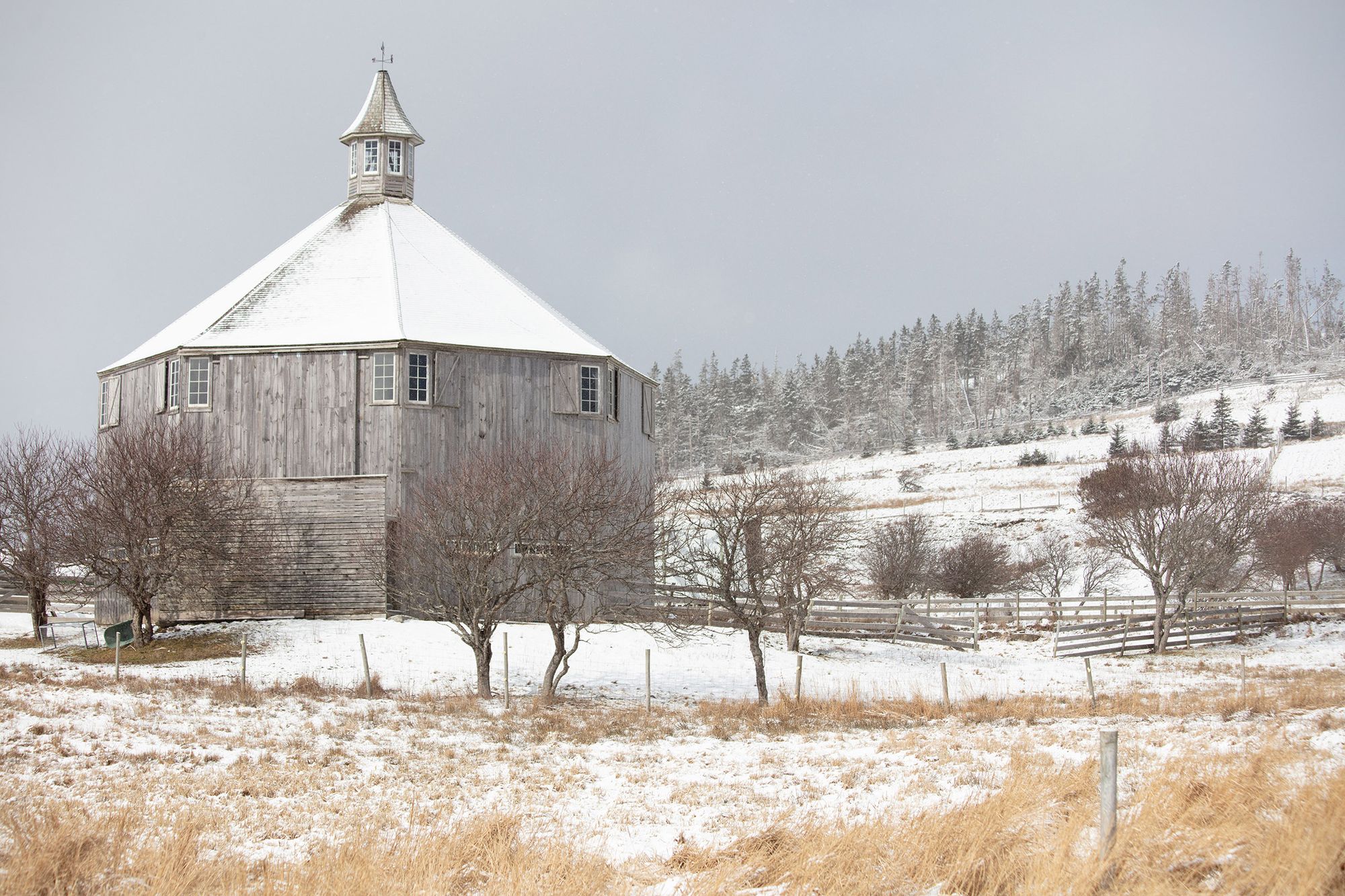
Troop Barn, Upper Kingsburg, Nova Scotia
“That made me really happy,” Sweetapple says. “If the hockey arena is nicknamed the barn, now we’re on the right track.”
Sustainability is similarly essential, but no substitute for architecture. “That is simply part of the way you need to work today,” he says. “But you still have to make good space while you are doing it, or it is a failure.”
The Cost of Importing Culture
One of Sweetapple’s clearest lessons came early in his career, while working with Brian MacKay-Lyons on the Canadian embassy in Bangladesh. The architects began by immersing themselves in the country’s building, material and social cultures.
“If you don’t understand the monsoon, you can’t build there. If you don’t understand the heat, the security and the density, you can’t build there.”
What they discovered was an exceptional local brickmaking tradition. “There’s no one in the world who does better bricks. They’re amazing. We’d pay a fortune in America or Canada to have bricks of that quality: handmade and beautiful.”
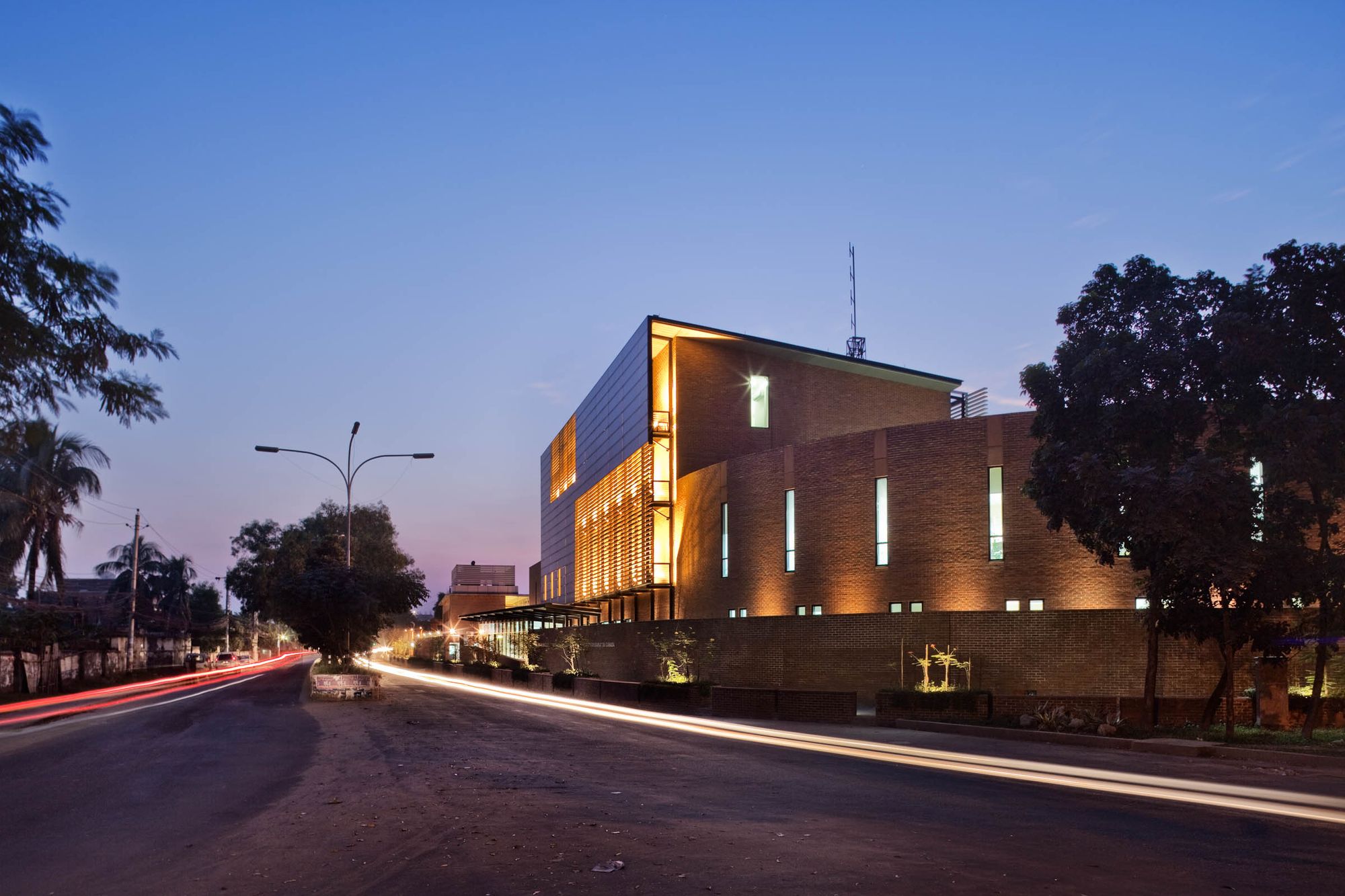
Canadian Chancery and Official Residence Dhaka, Bangladesh
However, the client wanted the embassy to project Canada as a technologically advanced nation, and pushed for use of Canadian materials and an elaborate curtain wall. The curtain wall, he says was a failure. The imported solution created heat gain, required additional aluminium shading, cost considerably more and became, in Sweetapple’s assessment, the least successfully crafted part of the project.
The issue was not only appearance, it was also resilience and repair. “If a curtain-wall panel comes off in a monsoon, it might take eight months to replace it in Bangladesh,” he says. “If a brick falls off, it can be put back in two hours.”
For Sweetapple, the compromise demonstrated what is lost when an imported idea of progress overrides local knowledge.
“If we’d built the whole thing from brick, it would’ve been beautiful. It would’ve been way better. It would’ve been way more meaningful. It would’ve been more of the place. And basically, ‘of the place’ means you’re dealing with climate.”
Prefabricated, Not Predetermined
Prefabrication creates a fresh version of the challenge. Factory production can reduce time on-site, limit exposure to bad weather and address the rising cost and scarcity of construction labour. On current residential work in Canada, Sweetapple says it can cost around 20 per cent less than conventional site construction.
The danger is that production-line efficiency also dictates a uniform architectural result. Sweetapple believes architects and fabricators need to work much more closely to occupy the ground between generic modular housing and expensive one-off design.
“Prefab and architecture have to come closer together,” he says. “Prefab is often not so nice, while architecture is less accessible to people. Somewhere in between is what we are trying to find: something a little less tailored than a custom home, but with a little dignity.”
The firm is developing product lines that can be made in the same factory while responding differently to Canadian regions. A coastal Nova Scotian building, where timber shingles perform well through freeze-thaw cycles, should not simply be transplanted to Ontario’s hotter summers and colder winters. Efficiencies can be shared without pretending the places are the same.
The same thinking is visible in the recently completed FreshGrass Annex at MASS MoCA in North Adams, Massachusetts. Built beside former workers’ houses in an old mill town, the hotel addition draws on their repetitive forms and the sawtooth roofs of industrial buildings. Prefabricated timber panels improved efficiency and reduced waste, but the result remains tied to the Berkshires’ building traditions.
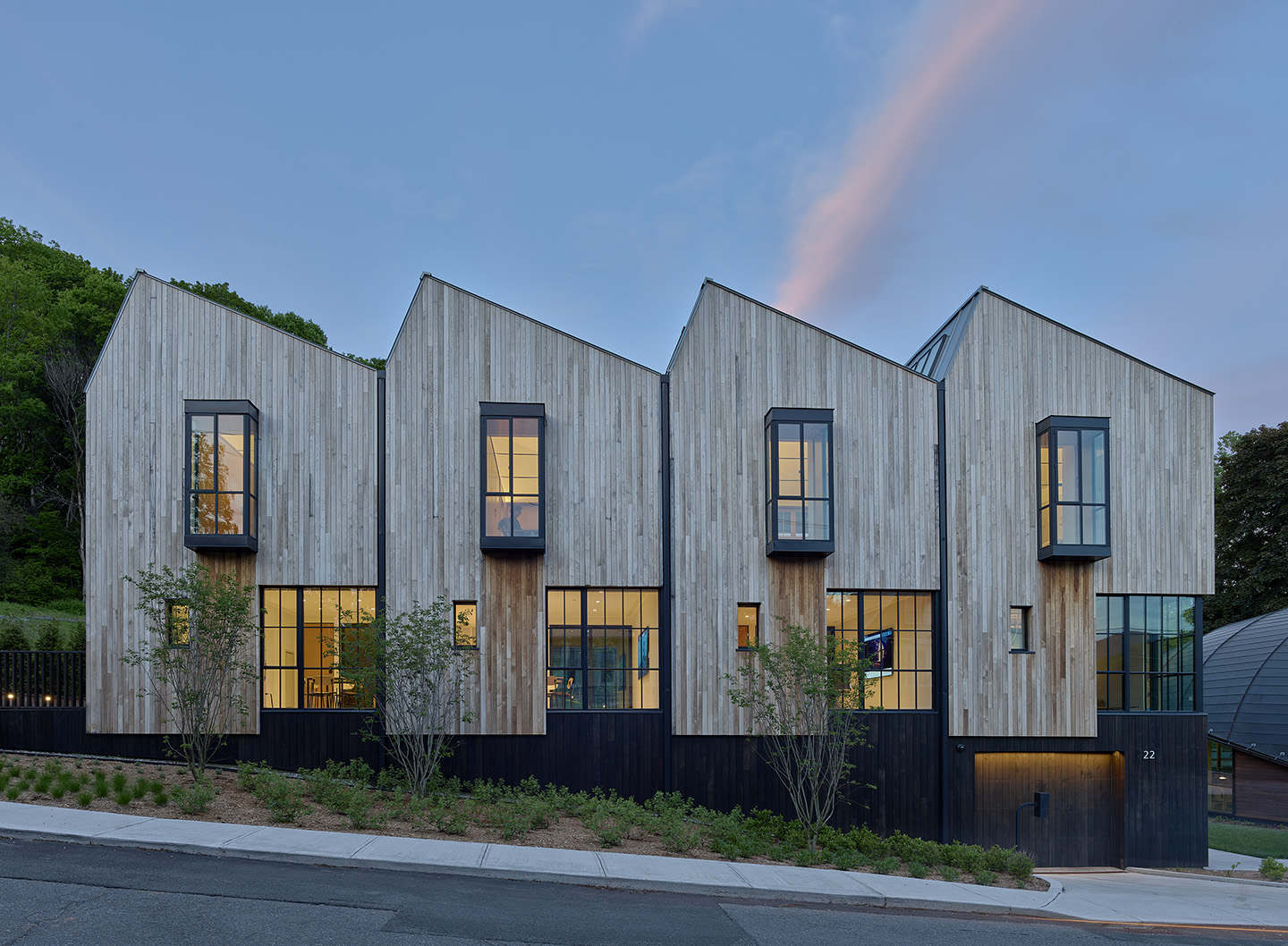
FreshGrass Annex, North Adams, Massachusetts
Sweetapple describes the project as “a haiku” about how to build in that environment now, recognising the town’s transition from industrial production to an arts economy without erasing what came before.
Know Your Place
Sweetapple plans to arrive six days before his first Design Experience address and travel through parts of the South Island. He wants the New Zealand landscape, architecture and building culture to influence what he says.
“I might change my lecture 180 degrees after I see some things in New Zealand,” he says. “I want to do a quick case study and pull out some ideas.”
His wider purpose is to encourage architects, particularly younger practitioners facing an accelerating flow of global imagery and AI-generated possibility, to decide what is meaningful before deciding what is fashionable.
“Young people are trying to work out what is meaningful and what isn’t,” he says. “My message is: make architecture meaningful. Make it so the people using it and the societies around it embrace it, use it and are inspired by it.”
Defeating sameness does not require rejecting standards, technology, sustainability or factory production. It means refusing to let them become the entire design brief. Sweetapple’s alternative is both ambitious and practical: “begin with what the place already knows”.
“You will still get the best value, the best product and the best quality if you look around where you are,” he says. “Importing travertine from Italy doesn’t make sense. It just doesn’t make sense.”
Design Experience, 14 September, 2026
Talbot Sweetapple will present in Wellington on Monday 14 September, Auckland on Tuesday 15 September, Hamilton on Wednesday 16 September and Tauranga on Thursday 17 September. Events run from 4.30pm to 8.00pm.
Keynote and registration details: designexperience.co.nz